BREAKING

Current Events and News

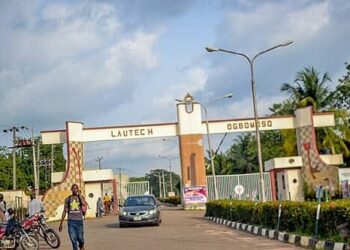
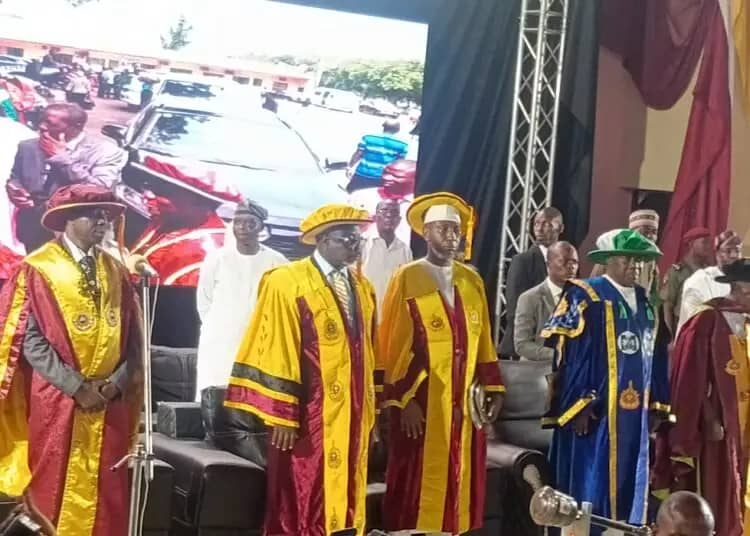
LAUTECH Graduates 2,582 Postgraduate Students, Expands Research Capacity at 18th Convocation


...To get all news updates, Join our WhatsApp Group (Click Here)

Femi Emmanuel

The Vice-Chancellor of Ladoke Akintola University of Technology (LAUTECH), Ogbomoso, Prof. Razaq Olatunde Rom Kalilu, has highlighted the institution’s growing postgraduate capacity and research output as the university graduated 2,582 postgraduate students during its 18th convocation ceremony.

Kalilu described the accomplishments of the graduands as a testament to discipline, sacrifice, and intellectual resilience, noting that their research contributions had advanced knowledge across several fields.

According to him, the university awarded 596 postgraduate diplomas, 1,850 academic and professional master’s degrees, nine Master of Philosophy degrees, and 127 Doctor of Philosophy (PhD) degrees.

He urged the graduates to embrace lifelong learning, innovation, and excellence in an increasingly competitive global knowledge environment.

“Being a Ladokite is a mark of excellence earned through rigorous academic training. You must uphold the values of this institution and make meaningful contributions to society,” he said.

The Vice-Chancellor also disclosed that the university had strengthened its postgraduate ecosystem through improved research infrastructure, expanded collaborations, upgraded laboratories and digital platforms, as well as enhanced supervision frameworks.

He added that 43 professors were recently promoted, while new initiatives such as the Sunday Adewusi Institute of Security and Strategic Studies, alongside the upgrade of the Department of Architecture to a full faculty, were positioning the institution for greater global relevance.

Also Read:  Grief and Outcry: Bereaved Mother of Jos Attack Victim Calls for Justice

In a related development, Oyo State Governor, Seyi Makinde, reaffirmed his administration’s commitment to supporting the university, announcing the approval of a ₦650 million take-off grant for the Teaching and Research Farm at the Iseyin campus.

Makinde, who was represented by his deputy, Bayo Lawal, said the initiative formed part of broader efforts to address infrastructure deficits and align the institution with the state’s economic priorities in agriculture, food security, and youth employment.

He also reiterated that the state government would settle all outstanding obligations to Osun State before the end of the administration, stressing that LAUTECH’s transition to sole ownership by Oyo State had brought stability and improved academic performance.

Meanwhile, the Pro-Chancellor and Chairman of the Governing Council, Ayodeji Omole, announced that the convocation ceremony would now hold annually on April 22 and 23.

He commended the Oyo State Government for its continued support and the progress recorded at the university, including ongoing developments at the Iseyin campus.

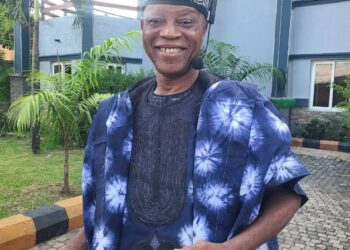
At the ceremony, an honorary Doctor of Letters (Honoris Causa) was conferred on Prof. Olu Raphael Aina, described as the first professor of vocational and technical education.

In his remarks, Aina said the honour was not merely a personal recognition but a celebration of the values that shaped his academic journey. He also recalled his longstanding relationship with the university dating back to its foundation years, when it was jointly owned by Oyo and Osun states.

The convocation attracted several dignitaries, including Oyo State Deputy Governor Bayo Lawal; former Chief of Defence Staff, Gen. Alani Akinrinade (retd); former Minister of Health, Prof. Isaac Adewole; Commissioner for Energy, Femi Popoola; Commissioner for Information and Civic Orientation, Dotun Oyelade; Commissioner for Education, Segun Olayiwola; and other prominent academics, stakeholders, and traditional rulers.

Also Read:  BALE MASIFA OF OGBOMOSO, HIGH CHIEF GBADEBO OYEBODE ADEOBA, TRANSITS TO THE ANCESTRAL REALM By: Adewuyi Adegbite. The entire Ogbomoso community has been thrown into mourning following the transition of the Bale of Masifa, High Chief Gbadebo Oyebode Adeoba, a revered traditional leader, seasoned herbalist, and custodian of Yoruba heritage. High Chief Adeoba, who passed away at the ripe age of about 85 to 90 years, was widely respected not only for his traditional wisdom but also for his deep knowledge of Ifa divination. His passing marks the end of an era for the Masifa community in Ogbomoso and for the traditional institution as a whole. Having known him for decades as a close friend of my late father, I recall that during my father’s lifetime, he often purchased planks from him. Following my father’s demise, Baba Adeoba continued to maintain a cordial relationship with me, sustaining a friendship that had spanned generations. It was, therefore, with deep sorrow that I received the news of his transition to the land of the spirits. Though his death calls for celebration, given his age and achievements, it is always difficult to part with a loved one. In the Yoruba worldview, however, such a man is not considered dead but rather transformed into an ancestor. As a monarch and traditionalist, Bale Adeoba lived a fulfilled and exemplary life worthy of emulation. A professional herbalist and seasoned Babalawo, he was deeply versed in the Odu Ifa corpus. His expertise in divination took him beyond Nigeria’s borders to South America, particularly Brazil, where he not only practiced Ifa divination but also lectured adherents on its rudiments. Masifa, the community where he reigned, holds a unique historical position in Ogbomoso’s evolution. It was one of the 143 towns and villages that converged in Ogbomoso during the early 19th century as part of a strategic move to ward off invasions from Ilorin and other enemies following the fall of Oyo-Ile, the capital of the ancient Yoruba Empire. The Masifa people originally migrated from present-day Osun State, specifically the Ejigbo Local Government Area. Other towns that migrated alongside them included Agurodo, Isudunrin, Ola, Aye, Iwata, and Opete. While many of these towns later returned to their original settlements after hostilities ceased, some—like Masifa, Agurodo, and Olorasoko—remained in Ogbomoso, duplicating their traditional institutions but maintaining familial and cultural ties with their homesteads. I had the privilege of interviewing Baba Adeoba some years ago while gathering materials for “The Genesis: The History of Okeelerin,” authored by His Majesty, Oba S. B. Amao, the Aale of Okeelerin. During the interview, I asked him how their ancestors came to settle in Ogbomoso from Masifa-Ile. When I jokingly suggested that they might have sought refuge during the Fulani invasion, the outspoken monarch was quick to correct me. He vehemently debunked that claim, insisting that the Ilorin war never reached Masifa or its environs. He asked rhetorically, “How could the war that did not affect Ejigbo, which is only a few kilometers from Masifa, reach us? Did the Ilorin army use fighter jets to bypass Ejigbo and strike Masifa?” According to him, a prominent Oba in the Oyo Empire had invited their forebears, along with other communities, to settle in Ogbomoso as a strategic military move to defend the remnants of the empire from Ilorin’s incursions after the fall of Oyo-Ile. He also challenged the popular historical account of the 1835 Eleduwe War, often attributed to Oluewu and his Ibaruba ally. He asserted that his ancestor, Alajiki, for whom a major street in Masifa is named, actually led the war. His submission revealed the shortcomings of historians who rely on limited or single sources of information. Baba Adeoba further explained that if their people had indeed fled to Ogbomoso as refugees, they would not have had the confidence to settle at the outskirts of the new town—close to Ilorin’s frontier—where communities like Agurodo, Alapa at Taraa, Ajaawa, Ayegun, Osupa, and others were strategically positioned as defenders. “These towns,” he emphasized, “did not run from war; they formed the protective shield of Ogbomoso.” His position aligns with the account of Reverend N. D. Oyerinde in his classical text, “Iwe Itan Ogbomoso,” which acknowledges the military significance of these frontier settlements. Despite lacking formal Western education, High Chief Adeoba was a man of great native intelligence, courage, and decisiveness. As a ranking chief under the Soun dynasty, he was exceptionally loyal and humble. While many sought beaded crowns and undeserved titles, he proudly bore the simple but dignified title of Bale Masifa. During his reign, Masifa witnessed remarkable progress. He mobilized indigenes at home and abroad—including notable figures such as L. A. Gbadamosi, Justice Afolabi Adeniran, Barrister Dapo Atanda, Hajj Rasak Gbadegesin Kareem, and Hon. Wumi Ladeji—to contribute to the community’s development through the Masifa Progressive Union. Beyond his developmental strides, Bale Adeoba elevated the spiritual and cultural stature of Masifa through his mastery of Ifa. He will be remembered for his cordial relationship with all Ogbomoso monarchs, his detribalized nature, his patriotism, and his commitment to sustaining the bond between Masifa in Ogbomoso and their ancestral home in Osun State. I extend my heartfelt condolences to Oba Ghandi Afolabi Olaoye (Orumogege III), the Soun of Ogbomoso, members of the Soun-in-Council led by High Chief Otolorin, other Soun High Chiefs, the Aale of Okeelerin, Oba S. B. Amao, the Aresa of Iresa (Pupa), the Onpetu of Ijeru, Oba Sunday Oladapo Oyediran (Lagbami Osekun III), members of the Masifa Progressive Union, indigenes of Masifa at home and in the diaspora, the Ola Aresa of Masifa, and particularly the Adeoba Royal Family, on the passage of this illustrious patriarch. May the ancestors receive him with open arms, and may his legacy of wisdom, humility, and progress continue to inspire generations to come.

You can get every of our news as soon as they drop on WhatsApp ...To get all news updates, Join our WhatsApp Group (Click Here)


Leave A Reply

Your email address will not be published. Required fields are marked *

Related Posts

LAUTECH Reaffirms Strong Partnership with NELFUND, Clarifies Loan Disbursement Update The management of Ladoke Akintola University of Technology has reaffirmed its cordial and productive relationship with the Nigerian Education Loan Fund following recent media interpretations regarding student loan disbursements. In a statement, the university expressed appreciation for NELFUND’s continued support, noting that more than ₦1.4 billion was successfully disbursed to its students in 2025. According to the institution, the intervention significantly reduced financial burdens and improved access to education for many students. Speaking during a pre-convocation press briefing, the university explained that about 19,000 students applied for the NELFUND scheme, while over 15,000 applications have already been verified in line with established procedures. The management further disclosed that within the current 2025/2026 academic session, a total of 5,237 students have been approved and are awaiting disbursement, while other verified applications remain at various stages of processing. LAUTECH clarified that parts of the update were misinterpreted in some quarters, creating the false impression that NELFUND was unwilling or unable to release funds. “The university wishes to state clearly that this is not the case. At no time did LAUTECH suggest any reluctance or failure on the part of NELFUND,” the statement said. The institution added that its intention was solely to highlight progress made so far and reassure stakeholders that the disbursement process remains ongoing and on course. LAUTECH reiterated its commitment to sustaining its partnership with NELFUND and other relevant stakeholders to ensure students continue to receive the financial support needed to pursue their academic goals. The statement was signed by Olayinka O. Balogun, Registrar of the university.

Load More Posts Loading...No More Posts.