Festus Adedayo
(Published by the Sunday Tribune, December 21, 2025)

As we walked into the venue of Professor Abimbola Adunni Adelakun’s mother’s 25th memorial in Ibadan, Oyo State, last Thursday, two conflicting perceptions warred for territorial possession of my mental faculty. For context, Adelakun is the award-winning columnist with the Punch newspaper whose Thursday offerings are a delight to gobble. Until recently an Associate Professor in the Department of African/African Diaspora Studies at the University of Texas at Austin, in July, Adelakun became an Associate Professor of Global Christianity at the University of Chicago Divinity School. With me at Adelakun’s re-conjuration of the memory of her mother was ace columnist, Lasisi Olagunju, whose mother’s passing 20 years ago would be memorialized too in Eripa, Osun State, two days later. I couldn’t find any reasonable anchor in what I saw as the two intellectuals’ mundane trade. For clarity, I have a deconstructive impulse towards memorialization.
Those two intellectuals were engaged in the construction of memorials for the dead. So, what is death? Western thoughts say it is the final cessation of life. Death is also construed by Western-influenced philosophy as a lieutenant of the Supreme God, Olódùmarè. In Yoruba cosmology, death, called Ikú, differs. E. B. Idowu, in his Olodumare: God in Yoruba Belief , 1962, narrates the beginning of death thus: “Ikú’s mother was killed In Èjìgbò-mekùn market: Ikú heard it in the house, Ikú screeched like the agón of Ìlóyè; Ikú rang out like an Arawo’s egg; He made cobras his spurs, He made boas his shoes, He made scorpions his girdle; Ikú fell upon the Locust Bean Tree, The Locust Bean Tree fell prone to the ground; Ikú fell upon the White Silk Cotton Tree, The White Silk Cotton Tree fell prone to the ground.”
The construction of memorials for the dead has always agitated me. In Africa, death is construed as a natural transition from a visible person to an invisible spiritual object. We diverge from the West in this worldview. To Africans, the spirit is the essence of man and is incapable of being destroyed by death. African dead exchanbge mortality for immortality. Our dead merely move to another realm as ancestral spirits, thus showing the connect we carve between the living and the dead, the visible and invisible worlds.
But curiosity about what happens upon death is as old as man. As far back as 1907, Hertz, in his “Essay on the Collective Representation of Death” had volunteered his views about death. Before him, our forefathers had propounded their own theses about death and dying. These must have prompted Omesade Awolalu in Yoruba Beliefs and Sacrificial Rites, (1979) to say the people “… believe in the active existence of the deceased ancestors. They know that death does not write finis to human life but that earthly life has been extended into the life beyond”.
Same view underpins the belief system of the Igbo. It is kept alive at traditional ceremonies where kolanuts are broken and spirits of the departed are invoked to guide earthly deliberations.
Among the Yoruba, there is a polar-position on existence. This world, they say, is a market while heaven is home. This they express as, “Ayé lojà, òrun ni ilé.” This conception was deeply analysed in “Metaphoric Associations and the Conception of Death: Analysis of a Yoruba World View” written by Ọlatunde B. Lawuyi and J. K. Olupọna, in Journal of Religion in Africa, (Feb., 1988).
It is this belief in the continued existence of life even after death that guides funeraries. Believing that the dead are somewhere watching, funerals are kept sacred to impress the dead. It is also why cremation has not found foot in African belief which holds that the whole body parts of the dead would live all over in the spirit world.
No Nigerian tribe that I know reifies the dead as the Igbo. In arguments against this culture of venerating dead bodies, I often engage my friend, Dan Nwomeh, on why our brothers from the East would, for instance, spend fortunes in transporting a dead from as far a place as Australia for burial among their kindred. His response conduces to the veneration and sacredness of human remains even after their departure in Africa. To me, the dead is no different from a log of wood.
To justify the elaborate rites accorded the dead upon passage among the Igbo, Stella Ogbuagu, in her “The Changing Perception of Death and Burial: A Look at the Nigerian Obituaries” Anthropologica, (1989), says “funerary rites are performed to enable the spirit of the dead person to travel safely to the world beyond, to establish a continued link between the dead person and his kin, and also to satisfy societal expectations that the family show how virtuous and successful (in terms of personal achievements, etc.) and well loved their deceased kinsman was.”
In spite of our belief in the continuity of life after death in Africa, however, there is still a feeling of void at the departure of a loved one. Indeed, death is a depthless hole dug in our hearts. A number of feelings of hopelessness, truncation, finality are expressed by the Yoruba upon the news of death. In elegies for the departed, my people chant a dirge which approximates death to a visible encounter forever delinked, except at chanced meetings by the wayside, and embraces in dreams (Ó di gbéré, ó d’àrìnàkò; ó d’ojú àlá!). One other expression of void in death is the comparison of the departure of a loved one to a dead rat whose walk path is consumed by weed growths (Ẹmọ́ kú ojú Òpó dí) or the aardvark, a pig-like bush animal called Àfẹ̀èbòjò, dying and leaving a big mourning among the community resident in its hole, (Àfèèbọ̀jó kú Ẹnu isà ń s’ọ̀fọ̀).
There is however a disjunction in my people’s submissions on death, a binary of opinions, if you like. While on one hand, they believe that the dead don’t die, they also seemingly agree with western thoughts that death is a finality. For instance, while they say, in one breath that the dead don’t know how much their coffins are purchased, (Òkú ò mọ iye àá ra agọ̀) they also say that the dead can achieve immortality in their offspring and that the dead who leave children behind do not sleep.
But why do we memorialize the dead? Each time my younger brother brings up the idea of orchestrating a public ceremony to memorialize our parents, I not only scoff at the idea, I disdain it. Is this for the dead or the living? On a personal note, there is no day I do not remember and mourn my parents’ passage. Their earthly actions guide me and I clone their patterns in parenting my children. It is why Prof Adelakun and Dr. Olagunju’s public memorialization of their mothers last week struck me as beneath intellectuals. I have since then been made to understand that people have different ways of memorializing their loved ones. While for some, it is through rituals, for others, it is ceremonies and objectifying their memories.
I am however not unmindful of the psychology of memorialization. Memories of the dead are like soothing balm and help smoothen coarse surfaces left by death. They are indeed crucial for grieving, healing, and keeping the essences of our loved ones alive. Memories and memorials transform pain into love as I witnessed in the two columnists last week. In establishing a foundation at the University of Ibadan for her mother, Adelakun must have succeeded in re-creating her late mother afresh.
I believe that our forebears, theologians, African elders and even western philosophy, apprehensive to assume that the life they lived hundreds of years ago would suffer inexplicable cessation if it all ended here on earth, theorized life after death to rescue themselves from the void that would later follow. But, could it not be a ruse afterall that there is life after death? Claims of living wraiths or transmigrated souls which Yoruba call Àkúdàáyà further problematize the concept of life after death. Theologians especially cannot stand Àkúdàáyà. Doesn’t the holy writ say after death is judgement?
To demonstrate their belief in life after death, my people submit that memorializing of a parent by their children is an eternal assignment. They believe that even among the dead, ones who leave offspring behind get dotted upon by them in the spirit world. This they express in their saying that “òkú ol’ómo kìí sùn l’órun”. Olagunju tells me that 20 years after, his mother still communes with him. The death of the rich, they say is for seven months, that of the poor, six years but one who lives behind children is eternal memorialization.
Prof Adelakun, to my mind, could be excused for memorializing her mother, who departed in a ghastly road accident 25 years ago when she was just 18 years old. How do I explain Olagunju’s, whose mother lived above 80? Perhaps due to the power of the umbilical cord, attachment to mothers is often life-long. However, I agree that we must define the precinct of our memorials. For some, it could be recreating their memories in daily life, to others, it is in rituals and to some others, public celebration. As my people say, no one can claim to know Òsó than her mother.
In any case, if there are no memorials, why do we exhort valiant heroes who departed this world even centuries ago? While Muslims memorialize Prophet Muhammed every year, Christians do Jesus Christ. In the next four days, it will be time for another memorial.
Happy Christmas ahead to all Christian faithful.
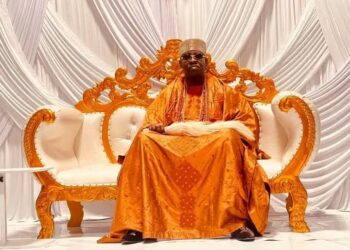
This brings me to a raging but silent tiff among Yoruba topmost traditional rulers, the Alaafin of Oyo and the Ooni of Ife. While they recently waged the war on pages of newspapers, their recent recourse is to semiotics. A couple of weeks ago, the Ooni conferred on renown industrialist, Engr Dotun Sanusi, the revered chieftaincy title of the Okanlomo of Oodua. Earlier, upon its announcement, the Alaafin couldn’t hide his indignation at this and called on the Ooni to reverse the title as he alone was historically and constitutionally bound to so do. Ooni went ahead on December 15 nevertheless. Last week, a piece of news dropped out of the Oyo ancient palace that the Alaafin would be conferring same Okanlomo title on Seyi Tinubu, son of the Nigerian president.
While addressing the state’s traditional rulers on October 13, 1983, as well as his broadcast of December 2, 1983, former governor of Oyo State, Dr. Omololu Olunloyo claimed that the struggle for supremacy between the Ooni and the Alaafin stools was as a result of Action Group’s (AG) founding in 1951.The Unity Party of Nigeria which came on board in 1978 and which rivaled Olunloyo’s National Party of Nigeria also continued in the same mould by preferencing Oba Okunade Sijuade. So, there was no doubt that Olunloyo, being a major enabler of Alaafin Adeyemi to the throne of his deposed father, would tilt towards Oyo during his short time in office as the governor of Oyo State.
Between October 1983 and June 1984, the in-fighting between the rulers became so embarrassingly intense. It got to a point that the military government of the State had to intervene. Before then, on October 1 1983, the tussle became irreconcilable, so much that, at his swearing-in as the newly elected governor of the state, Olunloyo had to promise both parties that his administration would find lasting solution to it. He could not.
At a meeting called by the governor on Thursday, October 20 of that year, the Ooni, who had been chairman before Olunloyo came into office, referred to himself as “the father of all” which riled the Alaafin and his Oba supporters. The Alaafin promptly replied that that tag was misplaced as he was the father of all. He said that if Ooni had read his book of history well (apparently referring to Samuel Johnson’s book) he would have been abreast of claims “in the books” which have been found to be Oyo-centric. These claims preferenced Oyo as the origin of the Yoruba. Johnson’s book also claimed that the Ooni was the caretaker of Yoruba shrines in Ile-Ife and he was a descendant of a slave called Adimu.
After the passage of Oba Adesoji Aderemi, who brought a great visibility to the Ooni throne, the throne was taken a notch higher by his predecessor, Oba Sijuade and the in-fighting continued. The passage of Oba Olubuse and the recent transition of Oba Adeyemi was expected to douse this tension but it still has not. Their successors, Oba Enitan Ogunwusi and Oba Abimbola Owoade have carried on the battle in line with their predecessors’ struggle for supremacy in Yoruba Obaship.
The Olubadan of Ibadan, Oba Rashidi Ladoja has a workable, sensible way out of this tiff by the holders of both stools. Oba Ladoja said he was only Olubadan over the eleven local governments under him. It is achaic, unrealistic and I daresay, an ill-logic for any of the two warring monarchs to claim to be Oba of Yorubaland when they can’t make any proclamation in their domains and expect it to be adhered to by all the Yoruba nation. The empires they superintended over has collapsed and they should wake up to the reality of modernity. To “even score” by appointing the son of the president as Okanlomo, to me, is a childhood tantrum which is beneath an Alaafin. It is like playing with the Ido, an ancient childhood fantasy. Each of the kings is under a mere council chairman who can depose them, so why do they want to carve a world for themselves that does not exist?
Come to think of it, why did Alaafin choose Seyi Tinubu for that chieftaincy title? What are his contributions to Yorubaland that made the president’s son a numero-uno child (Okanlomo)? I have written copiously on this young man, upon whom I earlier conferred the àkébàjé (spoilt brat) title. I think that should suffice a title from anyone, if at all.
Last week, we were faced with another tantrum from a grown-up. The tragedy for many public commentators is that they villainize heroes and heroise villains. Due to reasons beyond our z, our judgements of them is based on public comments and newspaper reports. How were we to know that, beyond the drapes and façade of public veils, we have made unfair transpositioning? One of the latter persons, for me, is Siminalayi Fubara, the governor of Rivers State. I recall how Nigerians oscillated round him in his travails, villainizing his traducer, Nyesom Wike, while making hero of a straw man that he has morphed to be. The only court case against federal decision to suspend him for six months came from the PDP, a decision which the Supreme Court gave judicial imprimatur last week.
Same last week, after porting to the APC, Fubara smelled like a filthy rag to all men of good conscience when, in his loquacious manner, he told the press that he had never really been a member of the PDP. This reversibility shows that Fubara does not really merit the leadership balls that people wore upon him. Yes, he is fighting the battle of his life, but he could do so without being mean and exhibiting this huge ingratitude. He should learn from a colleague like Peter Mbah of Enugu State. Mbah moved to APC with no recriminations but gratitude to the political party that made him. It is such stuffs that great men are made of.
Those are my submissions this week. I rise.
You can get every of our news as soon as they drop on WhatsApp ...To get all news updates, Join our WhatsApp Group (Click Here)