By Priscilla Iyabo Awojuola
There are political meetings that end with handshakes, photographs and pleasantries. Then there are those that leave behind questions that demand answers.

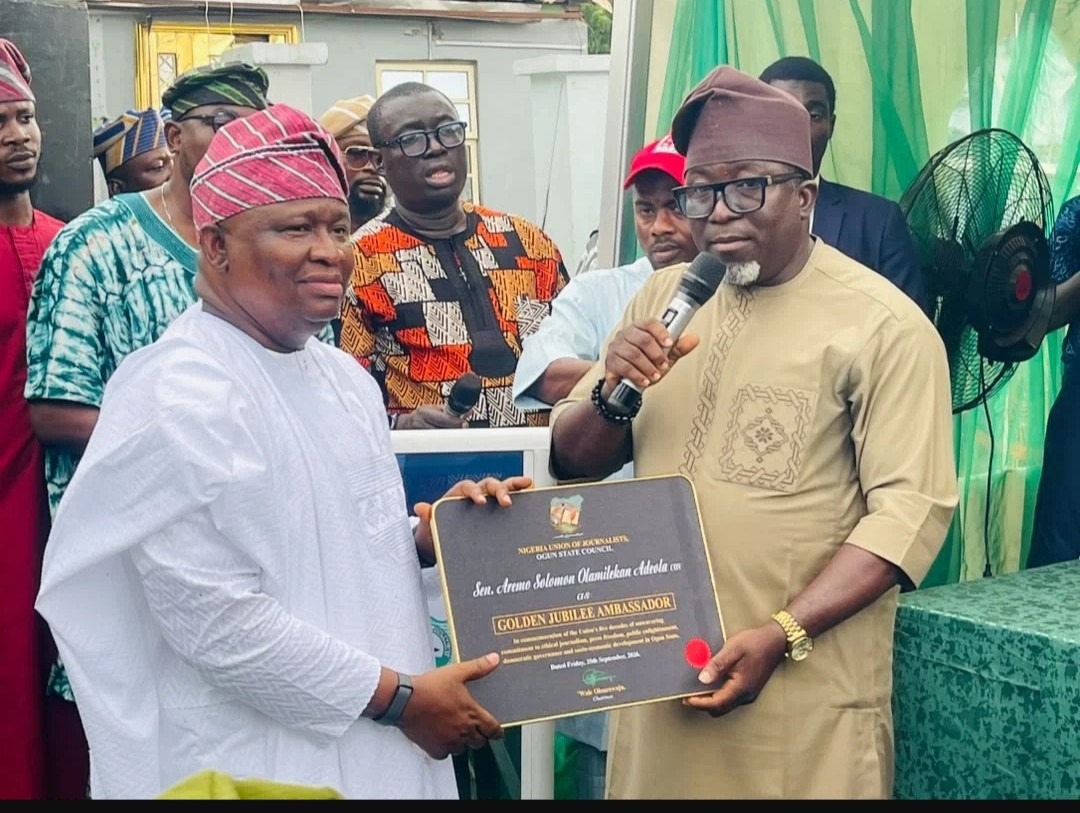
Senator Solomon Olamilekan Adeola’s September 25 engagement with journalists at the Ogun State Council of the Nigeria Union of Journalists (NUJ), Iwe Iroyin Press Centre, Abeokuta, belonged to the latter category.
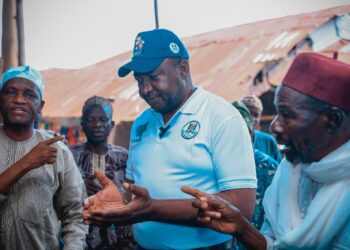
Adeola, popularly known as Yayi, appeared before journalists with his ITESIWAJU agenda and an unusual request: “Hold me accountable to what I have promised.”
The journalists, however, did not merely listen. They also placed their own demands on the table, transforming what could have been a routine political engagement into a broader conversation about governance, accountability and the role of the media.
Adeola, the All Progressives Congress (APC) governorship candidate in Ogun State, presented a nine-point development agenda covering infrastructure, tourism and culture, education, healthcare, security, agriculture, youth and women development, industrialisation, job creation and urban development.
He also spoke about institutional reforms, transportation, local government administration and revenue mobilisation.
But beneath the long list of proposed programmes and projects was a simple message: the manifesto should not be allowed to gather dust.
Adeola urged journalists to return to the document and measure his performance against it, project by project and commitment by commitment, should he win the 2027 governorship election.
He also pledged that an administration under his leadership would comply with the Freedom of Information Act and maintain regular engagement with the media.
That invitation places an important responsibility on the press because journalism does not end when the campaign microphone is switched off.
When the Watchdog Spoke
The Ogun NUJ did not allow the occasion to become a one-way conversation.
The union presented a Charter of Demands covering media infrastructure, professional development, welfare and the safety of journalists.
Among the requests were support for a modern permanent NUJ secretariat, a digital newsroom, multimedia facilities, a media innovation hub, a recreation arena and housing support for journalists.
The union also called for training in artificial intelligence, digital journalism, investigative and data journalism, and fact-checking. Other requests included scholarships, health insurance, equipment support and protection against occupational risks.
The demands were not presented without context.
The NUJ acknowledged previous interventions attributed to Adeola, including support for a solar-powered borehole, laptops and assistance for Press Week activities.
The council also highlighted projects it had undertaken in recent years, including solar power, free Wi-Fi and improvements to its facilities.
The broader message from the union was clear: a stronger media requires stronger institutions.
And that is where the conversation becomes bigger than one politician and one visit.
Beyond the Campaign Trail
Adeola’s presentation also placed considerable emphasis on Ogun State’s economic potential.
He spoke about the state’s strategic location between major economic centres, its industrial base, coastal communities and proximity to regional markets.
Among his proposals are a state bus mass transit system, commuter rail connections between Abeokuta and Lagos, a state-backed mobility platform, new economic clusters, and measures aimed at expanding industrialisation and job creation.
He also proposed reforms in agriculture, healthcare, education, security, environmental management and local government administration.
Among the more ambitious targets reported from the engagement was a proposal to train 100,000 young people in digital skills by 2031 and pursue the creation of more than 500,000 jobs.
These are campaign commitments, and campaign commitments, by their nature, demand scrutiny.
The questions are not simply whether the ideas sound attractive.
What will they cost? How will they be funded? What is the implementation timeline? Who will be responsible for delivering them? And how will citizens know whether the promises have been fulfilled?
Those are questions the media will inevitably have to ask.
A Promise to Remember
Perhaps the most significant part of the Abeokuta encounter was, therefore, not the political rhetoric. It was the invitation to remember.
Politicians make promises.
Journalists record them.
Citizens eventually ask what became of them.
By asking journalists to hold him to his manifesto, Adeola has effectively placed his proposed agenda on record before the state’s Fourth Estate.
The NUJ, on its part, has also placed its expectations on record.
The two documents may serve different purposes, but both now form part of the public conversation surrounding Ogun State’s journey towards 2027.
When the campaign season eventually gives way to governance, one question will remain as simple as it is important:
What happened to the promises?
That is where the real work of journalism begins.
Not in applauding the promise.
Not in dismissing it.
But in remembering it, questioning it and reporting what follows.
You can get every of our news as soon as they drop on WhatsApp ...To get all news updates, Join our WhatsApp Group (Click Here)