Story By Adewuyi Adegbite
Editorial: Sayo Alagbe

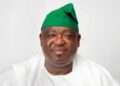
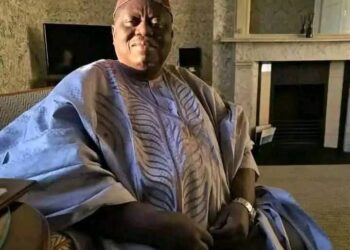
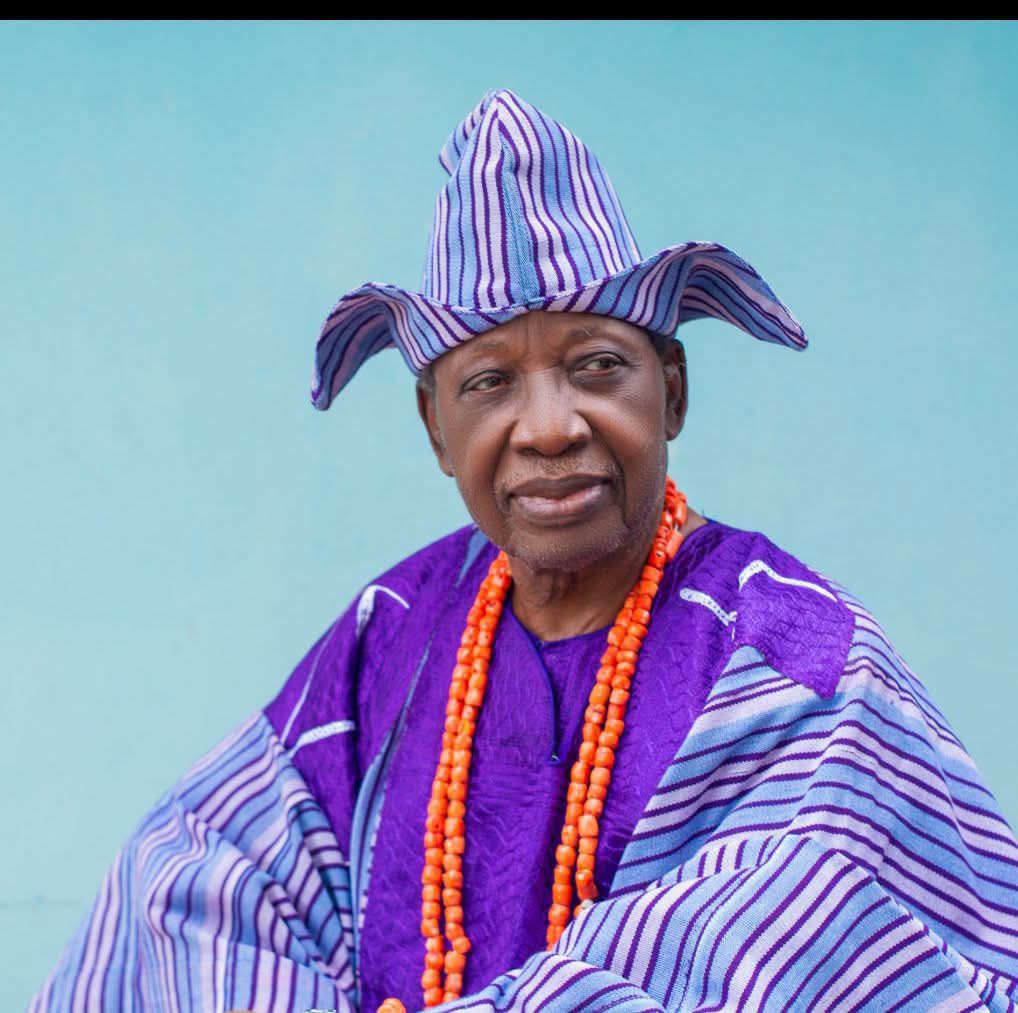
Ninety years is not merely an age; it is an archive of experiences, a repository of memories and, in the case of Dr Saka Adegbite Balogun, a remarkable journey through scholarship, politics, public service and traditional leadership. As the Balogun of Ogbomoso marks his 90th birthday on Wednesday, July 22, 2026, the occasion offers Ogbomoso and the wider Yoruba society an opportunity not only to celebrate an elder but also to reflect on the responsibilities that accompany age, knowledge and influence.
Born on July 22, 1936, Dr Saka Adegbite Balogun has undoubtedly earned his place among the notable sons of Ogbomoso. His footprints are visible in the university system, Nigerian politics, public administration and the traditional institution. He is an accomplished historian who passed through the University of Ibadan, taught at Makerere University in Uganda and became one of the pioneering academics in the Department of History at the University of Ilorin.
His academic pedigree is not in doubt. His doctoral research on the history of the Emirate of Gwandu and his specialisation in Islamic history in Northern Nigeria placed him among the second generation of Nigerian academic historians who contributed significantly to the development of historical scholarship in the country.
His contribution to Groundwork of Nigerian History, edited by Professor Obaro Ikime and published in 1980, is particularly significant. He was in the company of distinguished historians such as Professors J. F. Ade Ajayi, E. J. Alagoa, A. E. Afigbo, E. A. Ayandele, Ade Obayemi, Adeagbo Akinjogbin, Sa’ad Abubakar, Tekena Tamuno, A. I. Asiwaju, G. O. Olusanya, A. Fajana and Segun Osoba, among others.
That company speaks loudly about the academic class to which Balogun belongs.
It is therefore unfortunate that a man of such intellectual standing has, over the decades, become the target of accusations and insults from some sections of the society, particularly over matters in which he may have had little or no authority.
One of the most persistent allegations against him concerns the construction of the Osogbo-Ilobu-Ogbomoso road during the administration of President Shehu Shagari. Some have continued to accuse Balogun of failing to use his position as Presidential Liaison Officer to ensure that construction commenced from Ogbomoso rather than Osogbo.
This accusation deserves a more rational examination.
A Presidential Liaison Officer was not the authority responsible for determining the commencement point of a federal road project. The office was created largely to ensure that areas politically disadvantaged after the 1979 elections were not excluded from the benefits of the new democratic administration.
It is therefore unreasonable to make Balogun the scapegoat for a decision that was beyond his constitutional or administrative authority.
This is where history, rather than hearsay, becomes essential.
A society that claims to respect scholarship must learn to distinguish between fact and inherited narratives. Repetition does not transform an allegation into historical truth. Nor should political disagreements be allowed to become permanent historical verdicts.
Yet, while defending Balogun against unjustified accusations, we must equally acknowledge that he is not beyond criticism.
His position on the restructuring of Ladoke Akintola University of Technology, Ogbomoso, by the administration of Governor Seyi Makinde remains one of the issues on which many people in Ogbomoso have disagreed with him.
Following the successful struggle for sole ownership of LAUTECH by Oyo State, the Makinde administration subsequently introduced a multi-campus structure. The decision generated considerable opposition in Ogbomoso, including legal action by a major town organisation.
Balogun reportedly took a position different from the dominant sentiment in Ogbomoso and cautioned against opposition to the government.
Whether one agrees with him or not, his position was his own. But the episode demonstrates why elders with considerable influence must always appreciate the sensitivity of their words and interventions, especially on issues that touch directly on the collective interest of their people.
Indeed, Ogbomoso’s concern over LAUTECH was not simply a political disagreement with a governor. It was fundamentally about identity, ownership, equity and the future of an institution that had become deeply associated with the town.
The same principle applies to the history of Ogbomoso.
It is difficult to understand why two of the town’s most distinguished academic historians—Professor Emmanuel Ayankami Ayandele and Dr Saka Adegbite Balogun—did not devote substantial scholarly works to the history of Ogbomoso itself.
This is not necessarily a criticism of their careers, but it represents a missed opportunity.
Ogbomoso has a history too important to be left largely to oral narratives, partisan interpretations and the writings of untrained commentators.
The history of the town intersects with the histories of Igbon, Iresa, Ikoyi, Oje-Ile, the Old Oyo Empire, Ilorin and several other Yoruba communities. The emergence and role of the Ogbomoso confederacy after the collapse of the Old Oyo Empire also deserve rigorous academic attention.
Professor Adeagbo Akinjogbin’s famous question about what flourishing towns such as Ogbomoso were doing during the century of Yoruba wars remains relevant.
Chief Nathaniel O. Oyerinde deserves immense credit for making an early attempt to preserve Ogbomoso’s history through his 1934 classic, Iwe Itan Ogbomoso. Professor Babatunde Agiri also made an important contribution through his study of local government administration in Ogbomoso between 1850 and 1950.
But these efforts are not enough.
At 90, Balogun still has an opportunity to contribute to the preservation and clarification of Ogbomoso history. His knowledge, experience and access to historical materials could be deployed towards encouraging a new generation of scholars to research the town objectively.
This is particularly important because history has increasingly become a weapon in traditional and political disputes.
When history is written by partisans to justify present-day interests, it ceases to educate and begins to divide.
Ogbomoso does not need historians who write to please particular traditional institutions, families or interest groups. It needs scholars who will tell the truth as objectively as the available evidence permits.
Objectivity is not optional in historiography; it is its soul.
The same responsibility applies to traditional leadership.
Balogun has been an ardent defender of the institution of the Soun of Ogbomoso. His commitment to the throne is well known. He has spent considerable portions of his public life defending the traditional institution and supporting the authority of the Soun.
Now that he occupies one of the most influential chieftaincy positions in Ogbomoso, his responsibility has become even greater.
He must be a defender of the institution without becoming an instrument of division.
This is why his 90th birthday should also be an occasion to appeal to him to use his enormous influence to reconcile people and heal old wounds.
There are disagreements among political actors, traditional rulers, Muslim leaders, chiefs and other influential groups in Ogbomoso. Some of these disputes have lingered for too long. They have consumed the energy of elders, divided the elite and created unnecessary suspicion among the people.
At this stage of his life, Balogun should be above such divisions.
He has seen enough of Nigerian politics to know that political enemies of today can become allies tomorrow. He has lived long enough to understand that no political office, chieftaincy position or personal disagreement is permanent.
What remains is the community.
It is therefore our considered view that Balogun should deploy his influence towards reconciliation among the various factions and personalities within Ogbomoso, including those involved in disagreements surrounding the traditional institution and political leadership.
As a palace chief, he has a particular responsibility to cooperate with the Soun and strengthen the institution rather than contribute, directly or indirectly, to division around it.
The traditional institution must not become a battleground for personal interests.
Neither should historical narratives be weaponised to delegitimise one community or elevate another.
The various communities that make up Ogbomoso and its surrounding zone have distinct histories, identities and traditions. There is nothing wrong with preserving those identities. What is dangerous is allowing them to become instruments of hostility.
A person may proudly bear the name of his father, lineage or community, but the larger identity must always remain paramount.
Unity is greater than identity; peace is greater than pride.
The growing tendency to settle traditional disputes through press conferences, social media attacks, inflammatory statements and questionable historical narratives is particularly disturbing.
Ogbomoso cannot build its future by continuously fighting over its past.
Nor can bloggers and self-appointed historians, without adequate knowledge of historical methodology, be allowed to become the final arbiters of the town’s history.
The answer lies in scholarship, dialogue and evidence.
This is where Balogun’s experience becomes invaluable.
Few people in Ogbomoso today possess his combination of academic authority, political experience, traditional influence and historical knowledge. He has been an academic, a presidential liaison officer, a politician, a chief of staff, an adviser and now a prominent traditional chief.
That is an extraordinary accumulation of experience.
At 90, therefore, the greatest gift Balogun can give Ogbomoso is not another political victory or another argument won. It is peace.
His legacy should not merely be that of a historian who understood the past, a politician who survived changing political seasons or a chief who defended the throne.
His greatest legacy should be that of an elder who used his influence to bring divided people together.
He should become a bridge between the old and the young, between traditional institutions and modern political actors, between competing communities and between people whose disagreements have lasted for generations.
Ogbomoso needs such a bridge now more than ever.
The town is blessed with intellectuals, politicians, business leaders, traditional rulers, professionals and young people with enormous potential. What it needs is a stronger culture of cooperation among them.
Balogun’s 90th birthday therefore presents a rare moment for introspection.
For the younger generation, it is a lesson that history must be interrogated rather than inherited blindly.
For the political class, it is a reminder that power is temporary.
For traditional leaders, it is a warning that chieftaincy must serve the people rather than personal interests.
For historians, it is a call to document Ogbomoso’s past with evidence, courage and objectivity.
And for Dr Saka Adegbite Balogun himself, it is an invitation to use the final chapter of an extraordinary public life to write a story of reconciliation.
At 90, the question is no longer what more position Balogun can occupy. The more important question is what legacy he will leave behind.
Our answer is simple: let the legacy be peace.
Let him bring together the Muslim brothers who have been divided by disagreement. Let him encourage reconciliation among political actors. Let him strengthen the relationship between the palace and its chiefs. Let him promote tolerance among traditional institutions. Let him encourage professional historians to document Ogbomoso’s history without fear or favour.
Let him use his enormous influence to make Ogbomoso a model of unity rather than a theatre of perpetual contestation.
For a man who has spent much of his life studying history, there can be no better way to enter his tenth decade than to help make history worthy of remembrance.
Happy 90th birthday, Dr Saka Adegbite Balogun.
May the years ahead bring you good health, wisdom and peace—and may your influence become an instrument for healing the wounds of Ogbomoso and strengthening the unity of its people.
You can get every of our news as soon as they drop on WhatsApp ...To get all news updates, Join our WhatsApp Group (Click Here)