By: Ajao Stephen
There is a popular Yoruba saying: “Àṣà tó bá ń bẹ nílé, a máa hàn l’ọjà”—the virtues cultivated at home will eventually reveal themselves in the wider society.

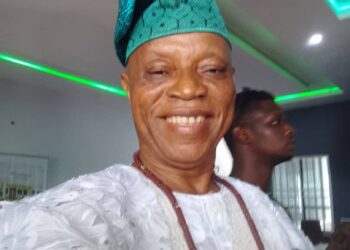
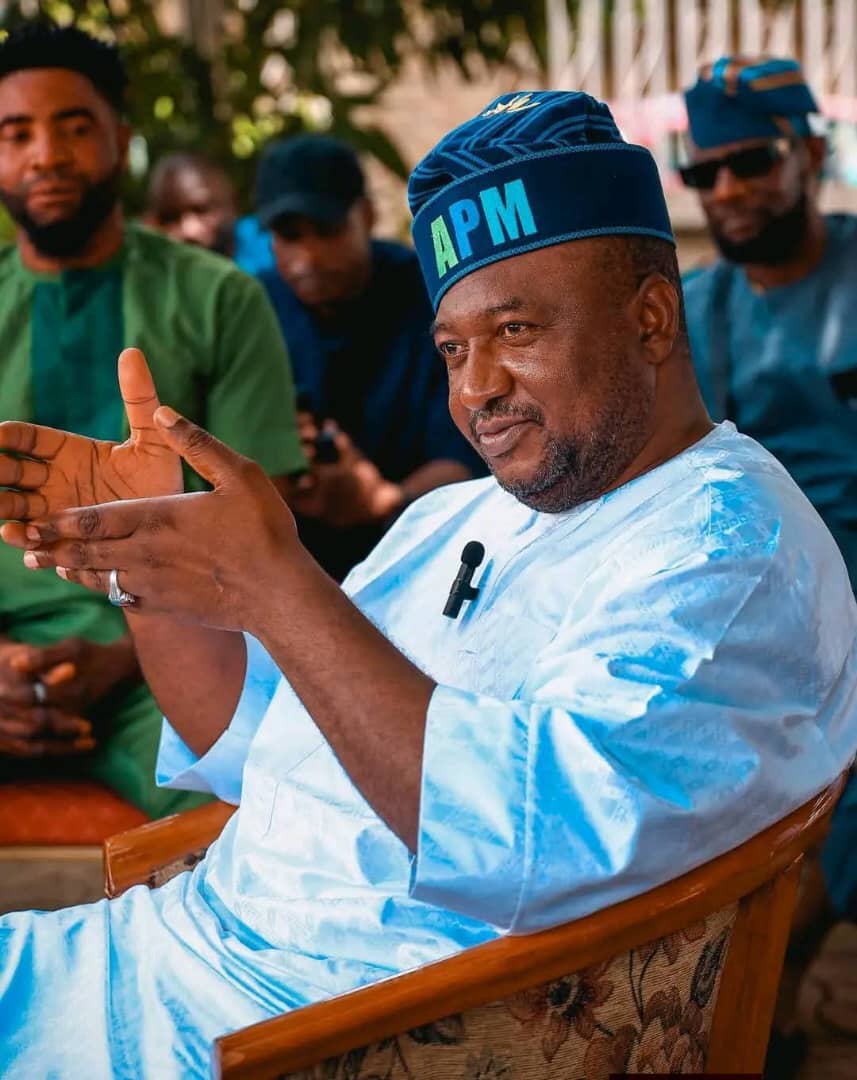
The saying aptly captures the growing political attention surrounding Engineer Muftau Open Salau, the Deputy Governorship Candidate of the Allied Peoples Movement (APM) in the 2027 Oyo State Governorship Election.
According to people familiar with his community engagements, Salau’s influence and acceptability extend beyond a single local government area, with supporters pointing to relationships across the five local government areas of Ogbomosoland: Ogbomoso North, Ogbomoso South, Oriire, Surulere and Ogo-Oluwa.
That reported grassroots reach has become one of the features of the APM ticket, which pairs Salau with its governorship candidate, Honourable Bimbo Adekanmbi.
A TICKET BUILT AROUND DIFFERENT POLITICAL ASSETS
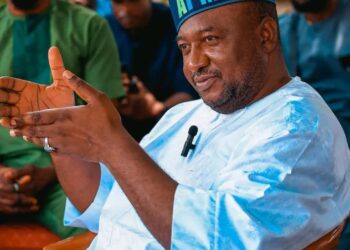
Adekanmbi brings a professional and public-sector background to the ticket. He is a chartered accountant and former Oyo State Commissioner for Finance and Budget Planning, with experience in senior public responsibilities.
He was born and raised in Ibadan, giving him a longstanding connection with the state capital. APM adopted him as its consensus governorship candidate in May 2026.
Salau, on the other hand, is being presented by his supporters as a grassroots politician and community figure whose relationships extend across Ogbomoso and neighbouring communities.
The political significance of the combination lies not simply in the titles held by the two men, but in the different constituencies and experiences they bring into the 2027 conversation.
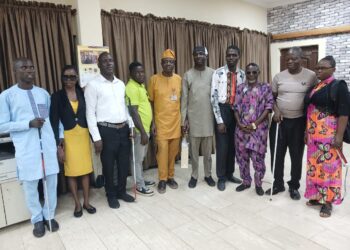
Across the five local government areas, supporters and community members describe Salau in terms that include humility, generosity, accessibility and willingness to listen.
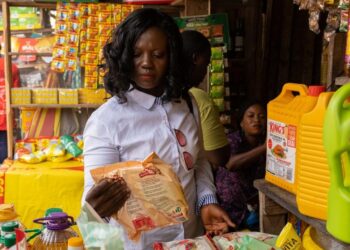
In Oriire Local Government Area, Mrs. Rianat Olaegbe, a trader, and Mr. Yisau Kadiri, a mechanical technician, reportedly spoke positively about his relationship with the people.
In Ogbomoso North, Mr. Olaleye Oladiran, an estate valuer, Mr. Jide Adeleke, Mrs Raseedat Bolomope described Engineer Salau as a lover of education who has committed personal resources towards educational advancement in his hometown.
Similarly, Mr. Johnson Okebukola, a retired teacher and Mrs. Riike Mustapha from Ogbomoso South, described him as a proponent of a society in which poverty and hunger would be substantially reduced.
In Surulere, Mrs. Ibiyemi Debora and Mr. Segun Aderoju reportedly described Salau as respectful, responsible and responsive.
From Ogo-Oluwa, Alhaji Alhassan Quadri, Mrs. Opeyemi Opaleke, Mr. Fetus Oyediji described him as approachable and someone who listens to his people.
Such testimonies, whether viewed from a political or community-development perspective, point to the importance of accessibility in public life.
THE MAKINDE FACTOR AND OYO’S CHANGING INFRASTRUCTURE LANDSCAPE
Any serious discussion of the 2027 Oyo State political environment would also have to take account of the infrastructure record of the administration of Governor Seyi Makinde.
The state government’s published project records show extensive road construction, reconstruction and rehabilitation across different parts of Oyo State.
In Ibadan, projects listed by the government include the Airport–Ajia–New Ife Express Road, Challenge–Odo Ona Elewe–Apata Road, Idi-Ape–Basorun–Akobo–Odogbo Barracks Road, BCJ–Railway–Gbekuba–NIHORT Junction, General Gas Flyover and other urban road interventions.
The infrastructure programme also extends beyond the state capital.
The 76.7-kilometre Iseyin–Fapote–Ogbomoso Road, now known as the Adebayo Alao-Akala Memorial Highway, connects the Oke-Ogun and Ogbomoso zones. The state government lists the road as completed.
The 65-kilometre Moniya–Ijaiye–Iseyin Road provides another major connection between Ibadan and Oke-Ogun, while the 34.85-kilometre Oyo–Iseyin Road connects Oyo and Oke-Ogun. The government has also reported rehabilitation of the Saki–Ogbooro–Igboho corridor.
The Ibarapa axis is also represented by the 48-kilometre Ido–Eruwa Road, which links Ibadan and Ibarapa and was listed as ongoing in the August 2026 state project update. The state has also reported rehabilitation work on the Igboora–Igangan–Iganna corridor linking Ibarapa and Oke-Ogun.
The geographical spread of these projects is politically relevant because infrastructure is one of the most visible ways in which citizens encounter government.
Roads affect transportation, movement of agricultural produce, access to markets, commuting, commercial activity and connections between rural communities and urban centres.
Consequently, the infrastructure record of the present administration is likely to form part of the broader political conversation that candidates and voters will engage with ahead of 2027.
For the APM ticket, this creates an important context. Rather than discussing the coming election only in terms of personalities and party structures, Adekanmbi and Salau will be operating in an electorate that can assess competing claims against visible developments across different parts of the state.
FROM IBADAN TO OGBOMOSO, OKE-OGUN, OYO AND IBARAPA
The spread of infrastructure projects has also altered the political and socioeconomic conversation about connectivity within Oyo State.
Ibadan remains the state’s largest metropolitan centre and a major political and commercial hub. Ogbomoso remains an important population and economic centre, while Oke-Ogun, Oyo and the three Ibarapa local government areas have their own agricultural, commercial and demographic significance.
The state government’s own infrastructure records describe several projects as improving connections between these zones—including Ibadan–Oke-Ogun, Oyo–Oke-Ogun, Ibadan–Ibarapa and Oke-Ogun–Ogbomoso corridors.
This wider geographical dimension matters to the Adekanmbi–Salau ticket because their political appeal will ultimately be tested across all parts of Oyo State rather than in one geographical bloc.
Adekanmbi’s Ibadan background and public-sector experience provide one dimension of the ticket, while Salau’s reported grassroots relationships across the five Ogbomoso-area local governments provide another.
GOODWILL, PERFORMANCE AND THE 2027 CONVERSATION
Another part of the political environment is the Makinde administration’s record on workers’ welfare, salaries, pensions and retirement benefits.
Government records report regular salary and pension payments and substantial disbursements to retirees, alongside infrastructure investments. These are matters that competing political actors can assess, challenge or seek to build upon as they present their own programmes to voters.
For APM, therefore, the task extends beyond presenting the personalities of Adekanmbi and Salau. The party will need to articulate clearly what the two candidates propose to do, how their policies would differ from existing programmes and how they would address the expectations of citizens across the state’s 33 local government areas.
The reported infrastructure achievements of the present administration may consequently become one of the reference points against which competing political narratives are presented.
At the same time, the existence of completed or ongoing projects does not by itself determine how individual voters will assess the government or how they will vote. Voters may consider multiple factors, including personal economic circumstances, public services, candidate records, party platforms, local issues and campaign organisation.
THE ROAD TO 2027
There is, therefore, a distinction between grassroots goodwill, political visibility and electoral outcome.
Salau’s reported acceptance across Ogbomoso North, Ogbomoso South, Oriire, Surulere and Ogo-Oluwa gives the APM ticket a significant local political narrative to develop.
Adekanmbi’s professional background, public-sector experience and Ibadan connection provide another component of that narrative.
Beyond the ticket itself, the wider Oyo political environment will include the electorate’s assessment of the Makinde administration’s record—including its road construction and rehabilitation programme across Ibadan, Ogbomoso, Oke-Ogun, Oyo and Ibarapa. The official project records demonstrate that these interventions have covered multiple zones and major inter-city corridors.
How those developments affect political perceptions will depend on how voters experience them in their respective communities and how competing parties interpret and present the record during the campaign.
For APM stakeholders, the Adekanmbi–Salau ticket therefore provides an opportunity to place professional experience, public-sector knowledge, Ibadan connections and reported Ogbomoso grassroots goodwill within a broader statewide political narrative.
Ultimately, the 2027 contest will be determined through the electoral process and the choices of Oyo State voters.
What is already clear, however, is that the political conversation will not be limited to personalities alone. It will also involve the competing records, programmes, promises, community relationships and development priorities presented to the people of Oyo State.
You can get every of our news as soon as they drop on WhatsApp ...To get all news updates, Join our WhatsApp Group (Click Here)