By Special Correspondent
For 56 days, the cries of frightened schoolchildren echoed only in the hearts of their parents.

Every sunrise brought renewed hope. Every sunset deepened despair.
Across Ogbomoso and neighbouring communities in Oyo State, families lived in agonising uncertainty, praying that the children and their teachers abducted by terrorists on May 15, 2026, would one day return alive.
Unknown to the public, however, another battle was unfolding hundreds of kilometres away inside the vast and treacherous Old Oyo National Park Forest.
It was not a battle fought for headlines or public applause. There were no dramatic announcements, no spectacular raids broadcast on television and no reckless military offensives designed to impress.
Instead, Nigeria’s security forces embarked on one of the country’s most carefully planned and intelligence-driven hostage rescue operations in recent history—a campaign where patience became the most potent weapon.
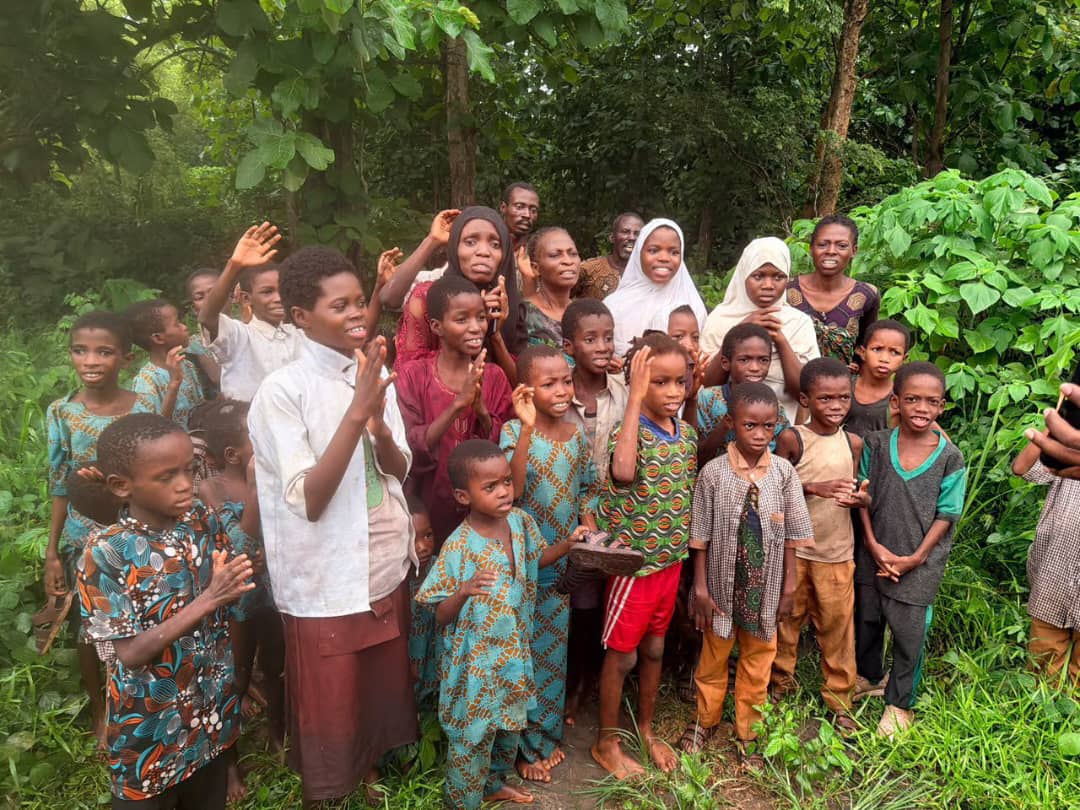
The operation reached its defining moment on Friday evening, July 10, when heavily pressured Ansaru terrorists surrendered and released all 44 abducted pupils and teachers without demanding or receiving any ransom.
Their freedom marked the end of a nightmare that had gripped Oyo State and the nation for nearly two months.
The abduction had sparked widespread outrage after armed terrorists intercepted the victims while travelling through Oriire Local Government Area, plunging dozens of families into fear and uncertainty.
Recognising the gravity of the incident, President Bola Ahmed Tinubu directed all security agencies to ensure the safe rescue of every victim.
That directive immediately triggered the formation of a Defence Headquarters-led Joint Inter-Agency Task Force under the supervision of the Chief of Defence Staff, bringing together some of Nigeria’s most experienced military, intelligence and law enforcement personnel.
The rescue mission drew elite operatives from the Nigerian Army’s 2 Division, Special Forces from the Defence Headquarters, the National Counter Terrorism Centre under the Office of the National Security Adviser, the Nigerian Navy, Nigerian Air Force, Nigeria Police Force, Department of State Services, National Intelligence Agency, Nigeria Security and Civil Defence Corps, Defence Intelligence Agency, as well as local security outfits including Amotekun Corps, vigilantes and hunters.
Unlike conventional military operations where overwhelming force often dictates the pace, commanders adopted a completely different approach.
Their mission was clear: rescue every hostage alive.
That objective shaped every tactical decision throughout the operation.
According to military sources, commanders rejected calls for an immediate assault, knowing that any hasty offensive could provoke the terrorists into harming the captives.
Instead, troops gradually penetrated the thick forests, advancing sector by sector while silently tightening a security ring around the terrorists’ enclave.
For weeks, surveillance aircraft and Intelligence, Surveillance and Reconnaissance (ISR) platforms monitored every movement within the forest.
Ground forces carefully mapped terrorist camps, escape routes, communication centres and supply lines before making any decisive move.
Every kilometre gained represented another step towards isolating the terrorists without placing innocent lives at risk.
Behind the scenes, intelligence agencies opened another front in the campaign.
Security operatives tracked suspected collaborators, logistics suppliers and informants believed to be sustaining the terrorist network.
Several suspects were arrested in surrounding communities, while investigators intensified efforts to dismantle Ansaru’s wider operational infrastructure.
As pressure mounted, the terrorists’ grip weakened.
Food supplies became scarce.
Communication channels collapsed.
Escape routes disappeared.
Intelligence reports indicated that morale within the camp deteriorated rapidly, with several fighters reportedly abandoning their commander and fleeing the forest.
By early July, security assessments suggested that the terrorists had become strategically isolated, suffering severe operational setbacks and diminishing resources.
Unable to withstand the sustained military and intelligence pressure, the group finally capitulated.
At approximately 6 p.m. on Friday, July 10, all the abducted pupils and teachers were released unharmed.
The announcement immediately triggered scenes of jubilation across Oyo State as families, friends and well-wishers celebrated the long-awaited return of their loved ones.
Confirming the successful operation, the Acting Deputy Director, 2 Division Army Public Relations, Lieutenant Colonel Danjuma Jonah Danjuma, disclosed that the rescue was the outcome of a meticulously coordinated intelligence-led operation under the leadership of the General Officer Commanding 2 Division, Major General C. R. Nnebeife.
Military authorities subsequently confirmed that the rescued victims were receiving comprehensive medical examinations, trauma counselling and psychosocial support before being reunited with their families through the Oyo State Government.
Senior defence officials insist that the 56-day duration of the operation should not be mistaken for operational weakness.
Rather, they argue, it reflected disciplined military planning, strategic restraint and an unwavering commitment to preserving innocent lives.
“The objective was never speed,” a senior defence official explained. “Our priority was to ensure that every child returned home alive.”
Security analysts believe the operation offers valuable lessons for future counter-terrorism campaigns.
Instead of relying solely on overwhelming firepower, the rescue demonstrated the effectiveness of intelligence-led operations, inter-agency cooperation and sustained pressure in dismantling terrorist networks while safeguarding civilian lives.
The mission has already been described within defence circles as one of Nigeria’s finest examples of modern hostage rescue operations.
Beyond the military success, however, lies a more enduring victory.
For 56 days, parents endured sleepless nights, communities united in prayer and an entire nation waited anxiously for good news.
Friday’s rescue brought not only freedom to 44 innocent victims but also renewed confidence in the ability of Nigeria’s security institutions to confront complex security threats through professionalism, coordination and resilience.
Deep inside the forests where fear once reigned, silence has returned.
This time, it is the silence of victory.
You can get every of our news as soon as they drop on WhatsApp ...To get all news updates, Join our WhatsApp Group (Click Here)