By Bode Durojaiye
Residents of Oyo town are in high spirits as His Imperial Majesty, Iku Baba Yeye, Oba Engineer Abimbola Akeem Owoade I, the Alaafin of Oyo and Superior Head of Yorubaland, today formally moves into the ancient Alaafin’s Palace at Oke Afin, Oyo.

The historic relocation marks a significant milestone in the preservation and revitalisation of one of the most important symbols of Yoruba civilisation. Prior to the emergence of the incumbent Alaafin, the ancient palace had fallen into disrepair, with vandalised facilities and dilapidated structures that urgently required rehabilitation and reconstruction.
Shortly after ascending the throne of his forefathers, Oba Owoade I embarked on the arduous task of restoring key sections of the palace, a move widely seen as a deliberate effort to preserve the tangible cultural heritage of the Yoruba people. The rehabilitation works are being supervised by the Alaafin’s Personal Assistant, Reverend Dr. Kolade Oladele.
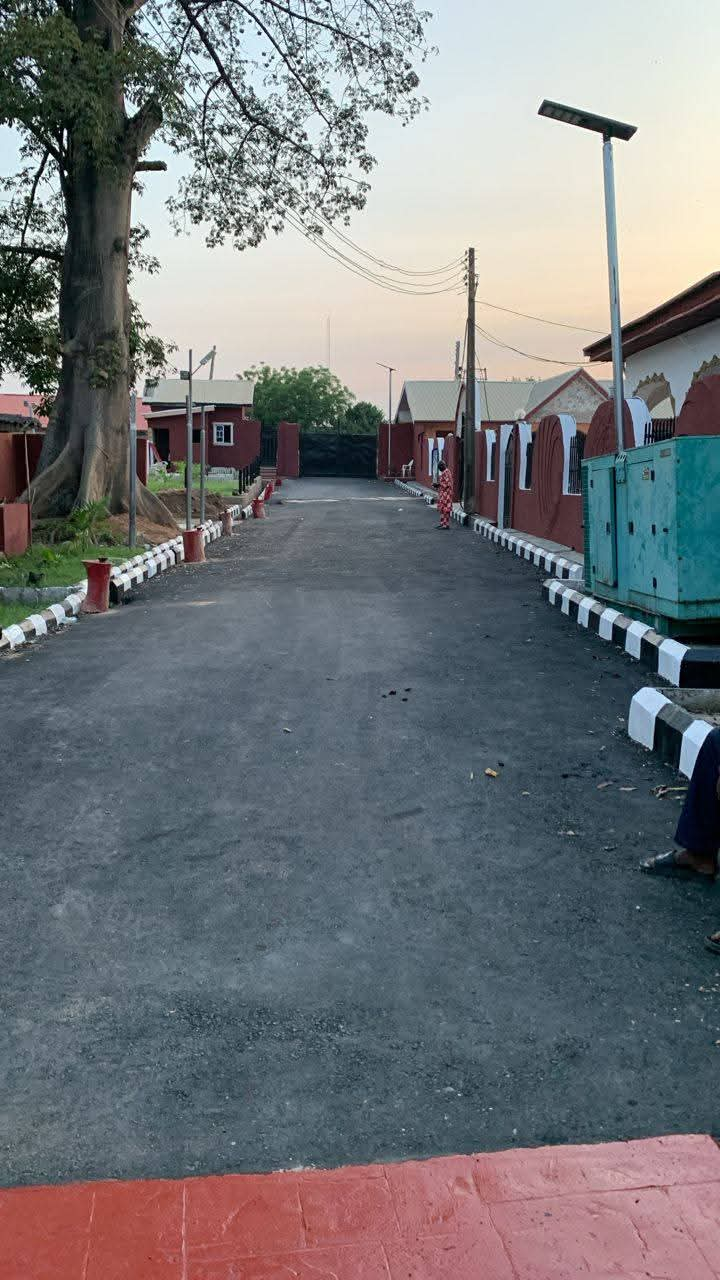
Today, the palace stands renewed—bold, sturdy and resilient—radiating timeless beauty through its well-structured layouts, carefully crafted columns, windows and doors that bear the artistic imprints of ancient Oyo art. Most of the buildings are designed around courtyards, with larger and more elaborate structures featuring multiple courtyards, each surrounded by rooms opening inward, a hallmark of traditional Yoruba architecture.
The Alaafin’s Palace is widely regarded as a living museum, offering deep insight into the grandeur and complexity of Yoruba culture. From Ile Orun, where royal ancestors are honoured, to Oju Oba, where the Alaafin holds court, every section of the palace is imbued with cultural and historical significance.
The palace is richly adorned with works of art, including carved wooden house posts and door panels—traditional symbols of wealth and royalty—as well as sculptures, murals, mosaics and painted scenes depicting daily life, historical events, imaginary beings and decorated calabashes. Modern artistic figures of lions and hunters also complement the ancient designs.
Tourism experts from across the world who have visited the palace have attested to its uniqueness and architectural excellence, describing it as second to none among ancient palaces in Nigeria. Further findings reveal that the Alaafin’s Palace is the largest traditional palace in the country, comprising over 200 buildings, complete with courtyards, gardens and fountains.
Beyond its architectural splendour, the palace symbolises the might and sophistication of the old Oyo Empire, once one of the most powerful and influential empires in West Africa, renowned for its dominance in politics, trade and cultural life.
The palace also serves as a centre for traditional festivals, ceremonies and rituals, drawing visitors from across Nigeria and beyond, while housing invaluable archival materials, documents and artefacts that preserve the history of the Oyo people—both favourable and otherwise.
As the Alaafin steps into the ancient citadel, residents—young and old—are set to troop out in large numbers to give their monarch a befitting welcome. Many describe Oba Owoade I as a serious-minded ruler, a leader of thought and a man of excellence, admired for his unwavering commitment to development, peace, unity and mutual coexistence within Oyo Kingdom and across Yorubaland.
The people believe his consistent emphasis on unity among the Yoruba positions him as a unifying and stabilising force, worthy of the revered throne he occupies. For the people of Oyo, protecting their history and traditions remains a sacred duty—and the revival of the ancient palace stands as a powerful testament to that resolve.
You can get every of our news as soon as they drop on WhatsApp ...To get all news updates, Join our WhatsApp Group (Click Here)